
High-temperature exposure
Temperature, thermal cycling, exhaust gas corrosion, oxidation, and local hot spots are reviewed before material direction is confirmed.
Turbocharger Housing · Turbine Housing · High-Temperature Exhaust
For turbocharger housings, turbine housings, exhaust adapters, and high-temperature exhaust connection parts, KTECH evaluates casting feasibility by temperature, thermal cycling, oxidation and corrosion exposure, thin-wall or complex internal geometry, material, machining, sealing faces, and quality-document requirements.
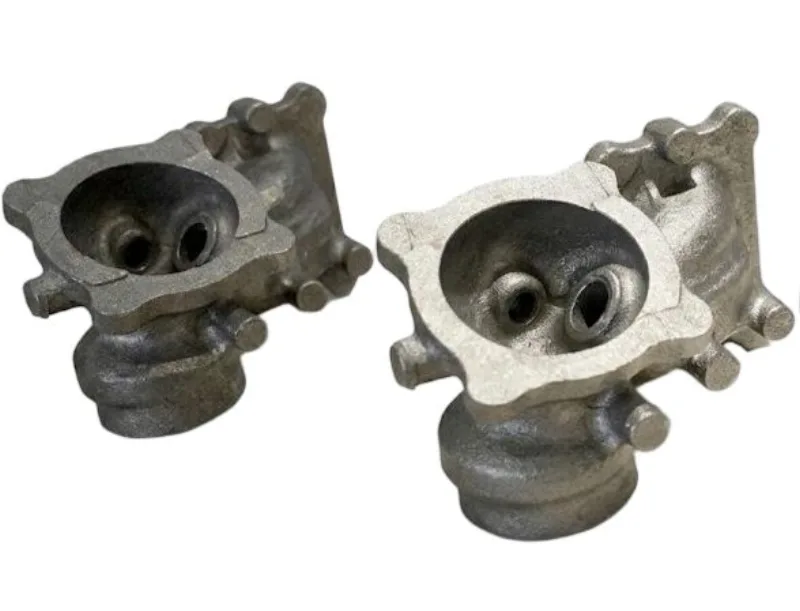
Project Review Focus
Temperature, thermal cycling, exhaust gas corrosion, oxidation, and local hot spots are reviewed before material direction is confirmed.
Thin walls, wall transitions, flanges, complex inner geometry, and machining zones are checked against filling, shrinkage, porosity, leakage and distortion risk.
CGI Si4Mo, high-nickel ductile iron, heat-resistant cast steel, stainless steel and other suitable directions can be reviewed with inspection records, material reports, dimensions and traceability requirements.
Suitable Project Types
For housing castings exposed to high heat, exhaust corrosion, oxidation, vibration, and repeated thermal cycling.
For components where internal geometry, core design, leakage risk, mounting faces, and casting stability must be reviewed together.
For projects with physical samples, old parts, 2D drawings, 3D files, or current supplier quality issues.
RFQ Information
Complete information helps confirm the casting route, material direction, tooling and machining scope, inspection requirements, and quotation boundary.
Submit Project DetailsQuality and Delivery Review
Shrinkage, porosity, leakage, cold shut, deformation, and machining instability are reviewed during process planning.
Material, mold, core, gating, feeding, controlled filling, and cooling approach are reviewed according to product geometry and service conditions. Counter-gravity or low-pressure sand casting can be evaluated where appropriate.
Dimensional inspection, material report, hardness, air leakage, and traceability can be discussed according to project needs.
Related Engineering Resources