
Engine application and thermal conditions
Engine type, installation position, service temperature, thermal cycling, exhaust exposure, vibration, and load direction are reviewed before process planning.
Engine Hot-End · Diesel · Marine · Natural Gas · Power Generation
KTECH reviews engine hot-end components for heavy-duty diesel, marine diesel, natural-gas and stationary power-generation engines where casting success depends on heat resistance, thermal cycling, corrosion or oxidation exposure, installation load, sealing faces, machining stability, and controlled inspection.
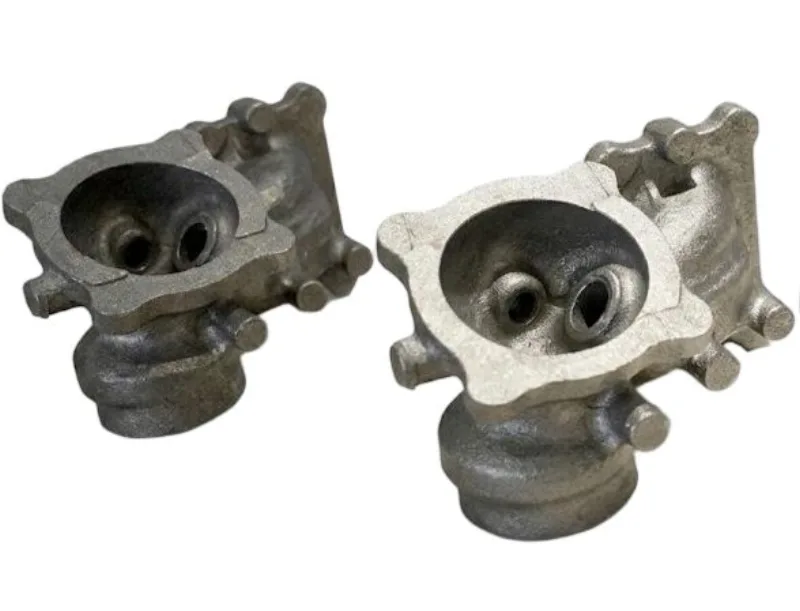
Project Review Focus
Engine type, installation position, service temperature, thermal cycling, exhaust exposure, vibration, and load direction are reviewed before process planning.
Ductile iron, SiMo ductile iron, CGI, heat-resistant cast steel, stainless steel or other specified material directions can be reviewed by project and service condition.
Machined faces, sealing areas, hole positions, tolerance requirements, datum strategy, and assembly surfaces are checked before quotation.
Suitable Project Types
For exhaust-side connection parts, brackets and severe-service structures exposed to high load, vibration, corrosion, thermal cycling or long operating periods.
For stationary gas-engine and power-generation hot-end projects where thermal cycling, sealing, dimensional stability and material direction must be reviewed together.
For customer-owned structures with drawings, 3D files, quality requirements, and planned annual demand.
RFQ Information
Complete information helps confirm the casting route, material direction, tooling and machining scope, inspection requirements, and quotation boundary.
Submit Project DetailsQuality and Delivery Review
Material and structure are reviewed against temperature, thermal shock, corrosion, oxidation, repeated cycling, hot spots and wall transitions.
Casting process, filling and feeding logic, machining allowance, datum design, sealing faces, and tolerance control are reviewed before production planning. Counter-gravity or low-pressure sand casting can be evaluated where appropriate.
Material report, hardness, dimensions, CMM, batch traceability, APQP and PPAP-related requirements can be confirmed according to buyer needs.
Related Engineering Resources